


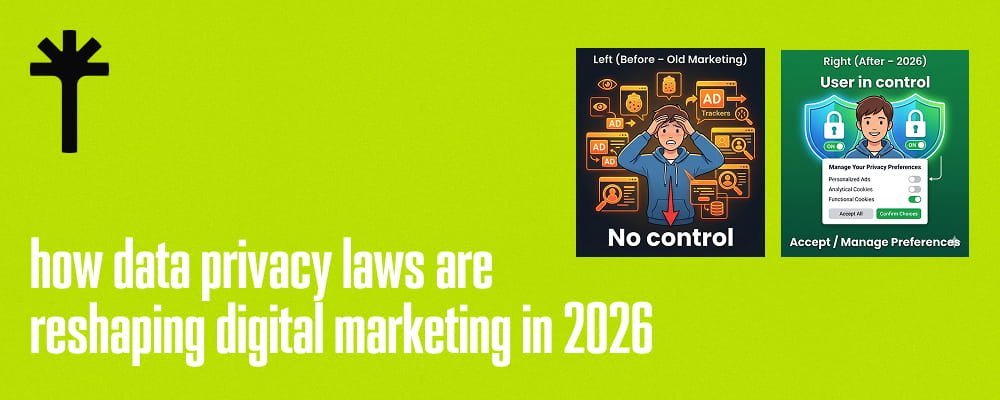
Digital marketing is entering a new era defined by transparency, trust, and accountability. As governments strengthen data protection regulations worldwide, brands must adapt their strategies to remain compliant and competitive. In 2026, data privacy laws are no longer optional considerations. They are core drivers of how businesses design, deliver, and measure their marketing campaigns.
For companies investing in professional social media marketing services, understanding privacy regulations is essential for sustainable growth.
The Rise of Global Privacy Regulations
Over the past decade, privacy frameworks such as GDPR, CCPA, and similar regional policies have transformed digital operations. By 2026, these laws have expanded further, covering biometric data, AI tracking systems, and behavioural profiling.
- New regulations emphasise
- explicit user consent
- transparent data usage
- limited data retention
- cross border protection
- stronger user control
As a result, traditional data driven targeting methods are being restructured.
Modern social media marketing strategies now prioritise ethical data collection and responsible engagement.
Decline of Third Party Cookies
One of the most significant changes is the near elimination of third party cookies. Major browsers and platforms now restrict cross site tracking, limiting access to behavioural data.
This shift impacts
- audience targeting
- retargeting campaigns
- attribution models
- personalised ads
- performance reporting
Brands relying solely on external data sources face declining effectiveness. Professional social media marketing services now focus on alternative data models.
The Rise of First Party Data
With reduced access to third party data, businesses are building systems around first party data. This includes information collected directly from customers through interactions, subscriptions, and purchases.
First party data strategies include
- email signups
- loyalty programs
- surveys and feedback
- community platforms
- gated content
Strong social media marketing integrates these touchpoints to create privacy compliant personalisation.
Transparency as a Competitive Advantage
In 2026, users actively choose brands that respect their privacy. Transparency is no longer a legal requirement only. It is a trust building tool.
High performing brands communicate
• how data is used
• why it is collected
• how long it is stored
• how users can control it
• how security is maintained
Leading social media marketing services help businesses convert transparency into brand loyalty.
AI and Privacy Compliance
Artificial intelligence plays a major role in modern marketing. However, privacy laws now regulate AI driven data processing, profiling, and prediction models.
- Marketers must ensure
- bias free algorithms
- consent based training data
- explainable AI systems
- secure data pipelines
- human oversight
Responsible social media marketing combines automation with ethical governance.
New Measurement and Attribution Models
Privacy regulations restrict user level tracking, forcing marketers to rethink performance measurement.
Modern analytics focuses on
- aggregated data
- cohort analysis
- contextual signals
- platform insights
- privacy safe modelling
This shift improves long term reliability and reduces dependency on invasive tracking.
Professional social media marketing services design reporting systems that align with legal frameworks.
Content and Community Become Central
As data targeting weakens, content quality and community engagement gain importance. Brands succeed by building loyal audiences rather than tracking anonymous users.
Effective strategies include
- value driven content
- educational campaigns
- interactive formats
- branded communities
- influencer partnerships
Advanced social media marketing strengthens emotional connection and organic reach.
Strategic Compliance for Business Growth
Privacy compliance requires technical, legal, and creative alignment. Businesses need integrated systems that support regulation without limiting innovation.
This is where arbortising provides strategic leadership. Through expert social media marketing services, arbortising helps brands design privacy first campaigns that maintain performance and credibility. Their solutions align data governance, platform strategy, and growth objectives. Learn more at
https://arbortising.com/services
By combining compliance frameworks with advanced optimisation, arbortising ensures marketing remains effective in regulated environments.
Conclusion
Data privacy laws are redefining how digital marketing operates in 2026. Brands that adapt proactively gain trust, resilience, and long term competitiveness.
Investing in compliant social media marketing services and responsible social media marketing strategies enables businesses to thrive in this new era. With expert guidance from arbortising, companies can transform privacy regulations into strategic advantages rather than limitations.