
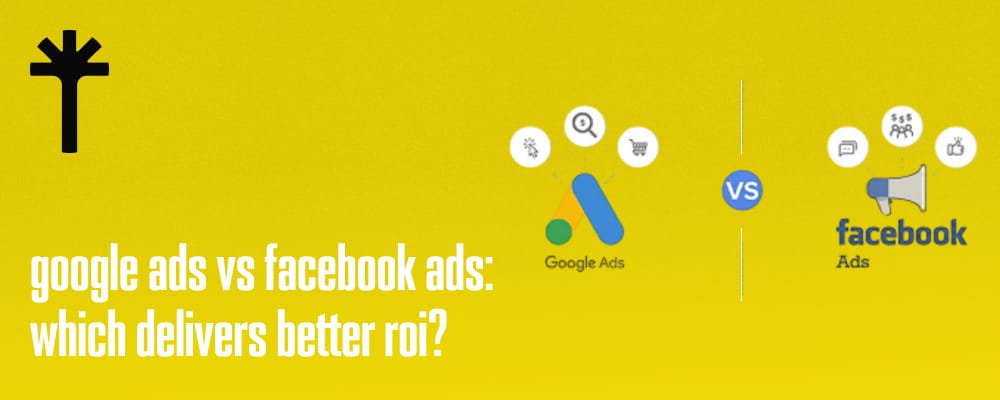
One of the most common questions businesses ask when planning their marketing budget is whether they should invest in Google Ads or Facebook Ads. Both platforms are powerful, both can generate impressive results, and both are widely used by businesses of all sizes. However, when it comes to return on investment, the answer is not always straightforward.
The reality is that Google Ads and Facebook Ads serve different purposes within the customer journey. Understanding how each platform works and where it performs best can help businesses make smarter decisions and maximize their marketing results.
For companies investing in digital marketing services, knowing the strengths and limitations of each platform is essential for creating campaigns that drive measurable growth.
Understanding Google Ads
Google Ads is based primarily on search intent. Users actively search for products, services, or solutions, and advertisers place their ads in front of these users at the exact moment they are looking for information.
For example, someone searching for “best accounting software” or “local web development company” is already expressing interest and intent.
This makes Google Ads particularly effective for reaching users who are close to making a decision.
Advantages of Google Ads
High Purchase Intent
Users searching on Google often have a specific need and are actively looking for solutions.
Immediate Visibility
Businesses can appear at the top of search results almost instantly.
Wide Reach
Google processes billions of searches every day, providing access to a massive audience.
Strong Lead Generation Potential
Search driven traffic often converts at higher rates because users are already interested in the offering.
According to Google Economic Impact reports, businesses earn an average of 2 dollars in revenue for every 1 dollar spent on Google Ads, although actual results vary by industry and campaign quality.
Understanding Facebook Ads
Facebook Ads, which also includes Instagram advertising through Meta’s advertising platform, operates differently. Instead of targeting active searches, Facebook focuses on audience targeting based on demographics, interests, behaviors, and engagement patterns.
Users may not be actively searching for a product when they see an ad. Instead, the platform introduces products and services based on what users are likely to be interested in.
Advantages of Facebook Ads
Advanced Audience Targeting
Businesses can reach highly specific audience segments.
Strong Brand Awareness
Facebook excels at introducing brands to new audiences.
Visual Storytelling
Images, videos, and interactive formats create engaging experiences.
Lower Entry Costs
In many industries, Facebook advertising can start with smaller budgets.
According to Meta, personalized advertising helps businesses connect with audiences more effectively by using relevant targeting signals and user interests.
Comparing ROI Potential
When discussing ROI, it is important to understand that return depends heavily on business goals.
When Google Ads Typically Delivers Better ROI
Google Ads often performs better when:
- Customers actively search for solutions
- Products or services solve immediate problems
- Businesses need qualified leads quickly
- Search demand already exists
Industries such as legal services, home services, healthcare, and business consulting often benefit significantly from search based advertising because customer intent is strong.
When Facebook Ads Typically Delivers Better ROI
Facebook Ads often performs better when:
- Brand awareness is a priority
- Products are visually appealing
- Businesses want to build demand
- Customer decisions involve emotional factors
Fashion, beauty, fitness, lifestyle, and consumer products frequently achieve strong results through social advertising because visual engagement influences buying behavior.
Customer Intent Versus Customer Discovery
One of the biggest differences between these platforms is intent.
Google captures existing demand.
Facebook creates new demand.
A user searching on Google has already identified a need. A user scrolling through Facebook may discover a product they were not actively considering.
This distinction significantly impacts campaign strategy and expected results.
Cost Considerations
Advertising costs vary by industry, competition, location, and targeting.
Google Ads often has higher cost per click because businesses compete for valuable search terms.
Facebook Ads typically offers lower cost per click but may require more impressions and engagement before generating conversions.
According to WordStream benchmark data, average costs can vary significantly across industries, making campaign optimization more important than platform selection alone.
The Importance of Conversion Tracking
ROI cannot be measured accurately without proper tracking.
Businesses should monitor:
- Cost per lead
- Cost per acquisition
- Conversion rates
- Customer lifetime value
- Return on ad spend
Many businesses make the mistake of focusing only on clicks rather than actual business outcomes.
Successful digital marketing strategies prioritize profitability rather than vanity metrics.
Why Many Businesses Use Both
The most successful marketing strategies often combine Google Ads and Facebook Ads rather than choosing one over the other.
A typical customer journey may look like this:
- Customer discovers a brand through Facebook
- Customer visits the website
- Customer leaves without converting
- Customer later searches on Google
- Customer clicks a Google Ad and converts
In this scenario, both platforms contributed to the final result.
This integrated approach creates multiple opportunities to engage and convert customers throughout their journey.
The Role of Digital Marketing Services
Managing paid advertising effectively requires expertise, testing, and ongoing optimization.
Professional digital marketing services help businesses:
- Select the right platforms
- Define target audiences
- Optimize ad performance
- Improve conversion rates
- Measure ROI accurately
Without proper strategy and execution, even large advertising budgets can produce disappointing results.
Which Platform Is Better for Your Business?
There is no universal answer because every business has unique goals, audiences, and products.
Google Ads may be the better choice if:
- You need immediate leads
- Customers actively search for your services
- You want to capture existing demand
Facebook Ads may be the better choice if:
- You want to build awareness
- Your products benefit from visual storytelling
- You need highly targeted audience segmentation
Many businesses achieve the strongest ROI by combining both platforms into a unified strategy.
Conclusion
The debate between Google Ads and Facebook Ads is not about which platform is universally better. It is about which platform aligns best with your business goals, audience behavior, and marketing strategy.
Google Ads excels at capturing intent, while Facebook Ads excels at generating awareness and engagement. Together, they can create a powerful marketing ecosystem that drives sustainable growth.
This is where arbortising supports businesses with expert digital marketing services tailored to modern advertising challenges. Whether you are looking to improve lead generation, increase conversions, or maximize advertising ROI, Arbortising helps brands develop data driven digital marketing strategies that deliver measurable results.
Learn more at https://arbortising.com/