Loading…


The demand for faster digital solutions has changed how businesses approach development. Companies now want websites, applications, and platforms that can be launched quickly without sacrificing quality or performance.
Posted by Arbortising -on June 8, 2026
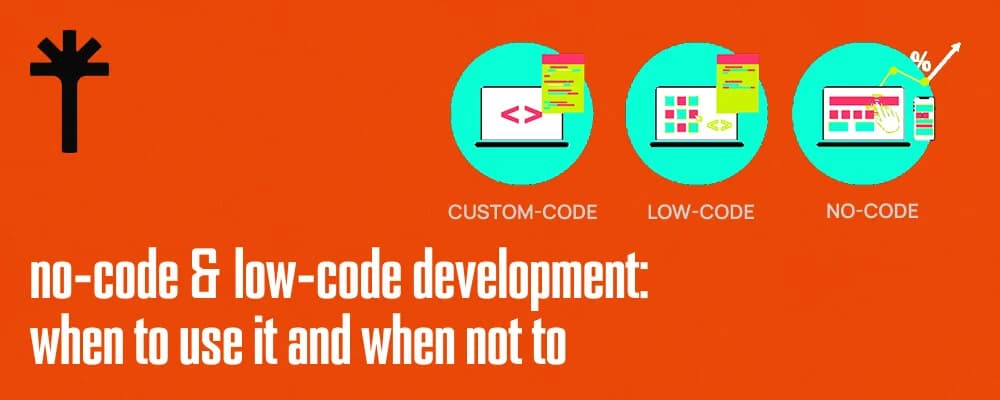
The demand for faster digital solutions has changed how businesses approach development. Companies now want websites, applications, and platforms that can be launched quickly without sacrificing quality or performance. This shift has increased the popularity of no code and low code development platforms.
These solutions allow businesses to build digital products with minimal coding knowledge, making development more accessible and efficient. However, while no code and low code tools offer many advantages, they are not suitable for every project. Understanding when to use them and when full custom development is the better choice is essential for long term success.
For businesses investing in Custom Development Services, making the right development decision can impact scalability, performance, and overall business growth.
No code development platforms allow users to create websites or applications without writing code. These platforms use visual interfaces, drag and drop builders, and prebuilt templates to simplify the development process.
No code solutions are designed for users with little or no technical experience, enabling teams to create digital products quickly and independently.
Examples of no code usage include:
Low code development platforms also simplify the development process, but they still allow some level of coding for customization and advanced functionality.
Low code solutions are often used by developers and technical teams who want to accelerate workflows while maintaining greater flexibility than no code platforms provide.
These platforms are commonly used for:
The growing popularity of no code and low code development is driven by speed, efficiency, and accessibility.
According to Gartner, low code development technologies are expected to account for more than 70 percent of application development activity, showing how rapidly these platforms are expanding.
Businesses are increasingly adopting these solutions because they help reduce development time and allow teams to respond quickly to market demands.
No code and low code platforms can be highly effective in the right situations.
Rapid Prototyping Businesses can quickly test ideas and validate concepts without investing heavily in full development.
Small Scale Projects Simple websites or internal systems often do not require advanced custom functionality.
Limited Budgets For startups and small businesses, no code tools provide a cost effective way to establish a digital presence.
Faster Deployment These platforms significantly reduce development timelines, allowing businesses to launch quickly.
Despite their benefits, no code and low code platforms have limitations that businesses must consider carefully.
Limited Customization Prebuilt templates and structures can restrict design flexibility and functionality.
Scalability Challenges As businesses grow, platforms may struggle to support increasing complexity and traffic.
Performance Limitations Applications built with no code tools may not perform as efficiently as fully custom developed solutions.
Platform Dependency Businesses often rely heavily on the platform provider, which can create challenges if pricing, features, or policies change.
For many businesses, full custom development remains the best option, especially for complex or long term projects.
Custom development provides complete control over functionality, scalability, and user experience. It allows businesses to create tailored solutions that align precisely with their goals.
Custom development is ideal for:
One of the biggest challenges businesses face is balancing speed with long term flexibility. While no code and low code tools provide rapid deployment, they may create limitations later as business needs evolve.
This is why many businesses use a hybrid approach. They start with low code solutions for initial growth and later transition to custom development as requirements become more advanced.
Professional Custom Development Services help businesses evaluate which approach best fits their goals. Experienced development teams can assess factors such as scalability, performance, integrations, and future growth plans before recommending a solution.
For businesses considering custom development, working with experts ensures that technology decisions support both immediate needs and long term success.
No code and low code platforms will continue to grow as businesses seek faster and more accessible solutions. At the same time, demand for custom development will remain strong for organizations that require advanced functionality and scalability.
The future is not about choosing one approach over the other. It is about understanding which solution fits the specific needs of each project.
No code and low code development platforms are transforming how businesses create digital products by offering speed, accessibility, and efficiency. However, they are not suitable for every situation. Businesses must carefully evaluate their goals, scalability requirements, and long term plans before deciding between these platforms and full custom development.
This is where arbortising supports businesses with expert Custom Development Services tailored to modern digital needs. Whether you need flexible custom development solutions or guidance on choosing the right development approach, Arbortising helps brands build scalable and high performing digital experiences.
Learn more at https://arbortising.com/
 Community Led Growth: The Future of Social Media Marketing in 2026The way brands grow on social media has changed dramatically over the past few years.
 Best Social Media Platforms for Different Business TypesSocial media has become one of the most effective ways for businesses to connect with customers, build brand awareness, and increase sales.
 we have answers!Call us